Executive Sourcing Summary & Market Dynamics
The global contract cosmetics manufacturing market is undergoing a seismic shift driven by AI-empowered consumer expectations, stringent regulatory standards such as the US Modernization of Cosmetics Regulation Act (MoCRA) and EU Regulation (EC) No 1223/2009, and an escalating demand for high-performance, clean-label formulations. Procurement leaders no longer seek mere fill-and-pack vendors; they require strategic original equipment manufacturing (OEM) partners who deliver deep R&D expertise, batch-to-batch consistency, robust supply chain resilience, and rapid market entry capabilities.
1. Understanding Cosmetics Contract Manufacturing: Technical Scope & Operational Models
Cosmetics contract manufacturing encompasses the outsourced development, formulation, testing, filling, and packaging of personal care and color cosmetic products by a specialized industrial manufacturer. For global beauty brands—ranging from scaling direct-to-consumer (DTC) enterprises to established global retailers—partnering with a dedicated contract manufacturer eliminates the massive capital expenditure (CapEx) associated with constructing cleanrooms, procuring high-shear homogenizers, maintaining analytical chemistry laboratories, and managing complex regulatory filings.
When evaluating contract manufacturing models, procurement directors must distinguish between three primary operational frameworks to select the alignment best suited for their unit economics and brand positioning:
- Original Equipment Manufacturing (OEM): The manufacturer creates custom formulations tailored precisely to the client's proprietary specifications, performance benchmarks, and ingredient exclusion lists. Full IP ownership or exclusive formulation rights typically remain with the client or are established under custom contract terms.
- Original Design Manufacturing (ODM / Turnkey Private Label): The manufacturer provides market-ready, pre-formulated products with validated stability profiles and regulatory dossiers. Brands select stock formulas, customize packaging artwork, and launch with minimized lead times and reduced initial R&D costs.
- Contract Packaging & Bulk Filling: The brand supplies bulk cosmetic mass directly to the facility, where the contract partner executes specialized filling, seal-integrity checks, unit cartoning, and secondary kit assembly in compliance with Good Manufacturing Practice (GMP) standards.
Comparative Matrix: OEM vs. Turnkey Private Label vs. Contract Filling
| Strategic Dimension | Custom OEM Manufacturing | Turnkey Private Label (ODM) | Contract Filling & Assembly |
|---|---|---|---|
| Formulation Customization | 100% Bespoke active system & shade matching | Pre-developed standard shade & texturization | Client-provided bulk mass |
| Time-to-Market | 16 – 26 Weeks (R&D + Stability validation) | 6 – 10 Weeks (Off-the-shelf ready) | 4 – 8 Weeks (Dependent on components) |
| R&D & Testing Costs | Included in custom project scope | Zero upfront formulation cost | N/A (Client handles mass testing) |
| Minimum Order Quantity (MOQ) | 5,000 – 10,000 units per SKU | 1,000 – 3,000 units per SKU | 10,000+ units per run |
| Regulatory Dossier Support | Full PIF / Safety Assessment creation | Pre-existing compliance dossiers | Filling compliance & micro-testing only |
2. High-Performance Product Categories & Formulation Engineering
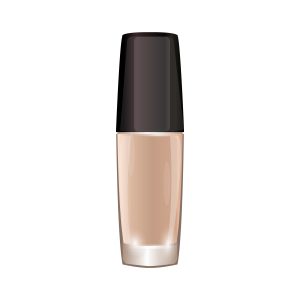
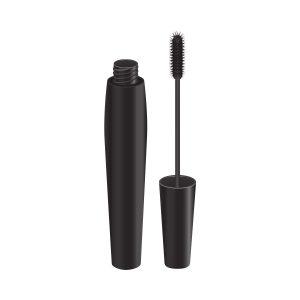
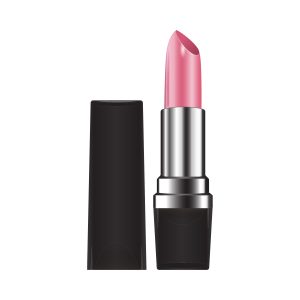
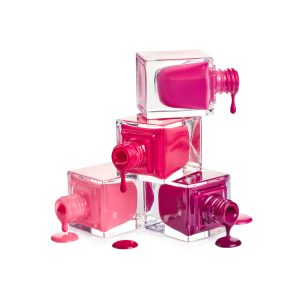
At N&K Cosmetics, our state-of-the-art facility integrates advanced fluid dynamics, micro-emulsification technology, and color-matching precision to deliver high-margin products across four flagship categories. Each product line is engineered to solve specific sensory, stability, and wear-time challenges encountered by consumers globally.