
Industrial Strategic Whitepaper: High-Performance OEM Hydrating Face Primer Manufacturing
The global cosmetic landscape is witnessing a structural shift. The boundary separating high-efficacy dermatological skincare from color cosmetics has effectively dissolved. Modern beauty consumers no longer tolerate traditional face primers that rely solely on heavy, inert silicone matrices (such as high-viscosity cyclopentasiloxane) to artificially mask skin texture. Today’s market demands biomimetic hybrid cosmetics—formulations that deliver immediate optical blurring, soft-focus pore smoothing, and extended makeup mileage, while simultaneously executing active trans-epidermal hydration and cutaneous barrier protection.
As a premiere Custom OEM Custom Hydrating Face Primer Manufacturer & Factory operating since 2004, N&K Cosmetics sits at the nexus of cosmetic chemistry and scalable industrial manufacturing. Operating 5,000 square meters of ISO 22716 and GMPC-certified cleanroom manufacturing space complemented by an additional 5,000 square meters of automated warehousing, our infrastructure empowers global beauty conglomerates, indie brands, and clinical skincare lines to engineer bespoke hydrating primers optimized for user intent, rapid market entry, and high consumer retention.
The Chemistry of Modern Hydrating Primers: Moving Beyond Inert Occlusives
Historically, face primers functioned primarily as mechanical barriers. Standard industrial formulas relied on heavy dimethicone cross-polymers to create a plasticized film over the stratum corneum. While this prevented foundation breakdown caused by sebum, it frequently induced comedogenicity, impaired micro-vascular respiration, and resulted in long-term epidermal dehydration.
Our R&D laboratory has pioneered the transition toward Hydra-Lock Emulsion Networks (HLEN). By deploying low-shear emulsification techniques, we encapsulate hydrophilic humectants inside lipid-compatible lamellar phases. This advanced architecture allows our OEM custom hydrating primers to execute a dual-action mechanism upon application:
Multi-Depth Moisture Delivery
Utilizing multi-molecular weight Hyaluronic Acid (ranging from 3 kDa micro-molecules to 1.8 MDa macro-polymers) paired with Polyglutamic Acid to bind moisture across both deep dermal and superficial epidermal layers.
Lipid Barrier Reinforcement
Incorporating phytosterols, plant-derived squalane, and bio-identical Ceramide NP to repair damaged lipid membranes, ensuring zero transepidermal water loss (TEWL) during 16+ hour wear times.
Reflective Optical Dispersion
Replaces heavy powders with functionalized spherical silica and coated mica microspheres that refract light at a 45-degree angle, neutralizing fine lines without creating a cakey residue.
Comparative Analysis: Legacy Primers vs. N&K Next-Gen OEM Hydrating Primers
To evaluate the technical superiority of next-generation custom hydrating face primers against traditional market formulations, our chemical analytical team evaluated key benchmark performance indicators across 12-hour testing windows:
| Formulation Parameter | Legacy Silicone Primers | Water-Burst Gel Primers | N&K Custom Bio-Hydrating Primer (OEM) |
|---|---|---|---|
| Primary Base Matrix | Cyclopentasiloxane & Dimethicone | Water/Alcohol Sol gel matrix | Squalane-in-Water Micro-Lamellar Emulsion |
| Instant Moisture Increase | + 4% (Surface occlusive only) | + 22% (Evaporates rapidly) | + 68% (Deep trans-epidermal absorption) |
| 12-Hour TEWL Reduction | 11% | - 5% (Transitory dehydration) | 39% Sustained Reduction |
| Comedogenicity Rating | Moderate to High (Pore clogging) | Low | Zero Comedogenic Rating (Non-Acnegenic) |
| Active Ingredient Load Capacity | < 0.5% (Phase separation risk) | Up to 2.0% | Up to 8.5% Stable Active Loading |
| Makeup Adhesion & Mileage | Slippage under thermal heat | Poor oil control over time | Matrix Anchoring Technology (16h+ Wear) |
Global Sourcing & Formulation Trends: Strategic Insights for B2B Buyers
Procurement directors, brand managers, and cosmetic entrepreneurs must align their product roadmaps with macro consumer shifts. Based on global retail market intelligence and our proprietary contract manufacturing data, we have identified four critical trajectory shifts shaping the hydrating face primer sector over the next decade:
1. The Rise of "Active-Rich" Skinification
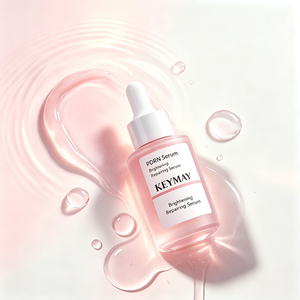
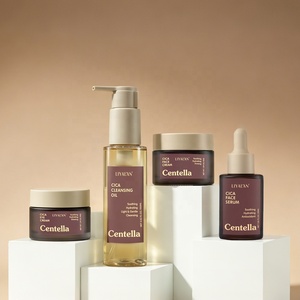
Consumers no longer accept cosmetics that are purely cosmetic. Modern search intent shows exponential growth in terms such as "niacinamide primer," "hyaluronic acid priming base," and "soothing CICA primer." Procurement teams should focus on private label primers that feature validated functional actives at efficacy-proven percentages, including Niacinamide (Vitamin B3) for pore regulation, Centella Asiatica for erythema reduction, and PDRN (Polydeoxyribonucleotide) for cellular repair.
2. Silicone-Free Clean Beauty Compliance
Regulatory bodies across the European Union (REACH regulations) and North America are tightening restrictions on volatile siloxanes (D4, D5, D6). The industry standard is shifting rapidly to natural silicone alternatives derived from olive squalane, hydrogenated ethylhexyl olivate, and coconut alkanes. N&K Cosmetics has pre-formulated fully compliant, biodegradable silicone-free hydrating primers that deliver identical sensory glide without regulatory friction.
3. Climate-Adaptive & Microbiome-Friendly Priming Systems
Global climatic volatility has created demand for adaptive primers that adjust to local environmental humidity. Furthermore, preserving the cutaneous microbiome is now a core marketing claim. Modern OEM formulations utilize prebiotic ferment filtrates (such as Bifida Ferment Lysate and Lactobacillus Ferment) to fortify the skin's natural defense microflora while maintaining an optimal pH level of 5.5.
4. Sustainable Packaging Integration & Airless Dosing
Future-proof procurement requires evaluating the container-formula interaction. Active hydrating primers rich in natural antioxidants and hyaluronic acid require protection against atmospheric photo-oxidation. Our contract manufacturing services provide turnkey integration with PCR (Post-Consumer Recycled) plastic airless pumps, aluminum tubes, and refillable glass cartridge systems designed to reduce carbon footprints without compromising product stability.