| Formula Positioning |
A formula can be developed around a defined product concept, such as natural finish, luminous finish, long wear, oil control, hydration, or sensitive-skin suitability. |
The product concept and performance profile are largely predetermined by the supplier. |
Supports clearer product differentiation and more consistent brand storytelling. |
| Shade Development |
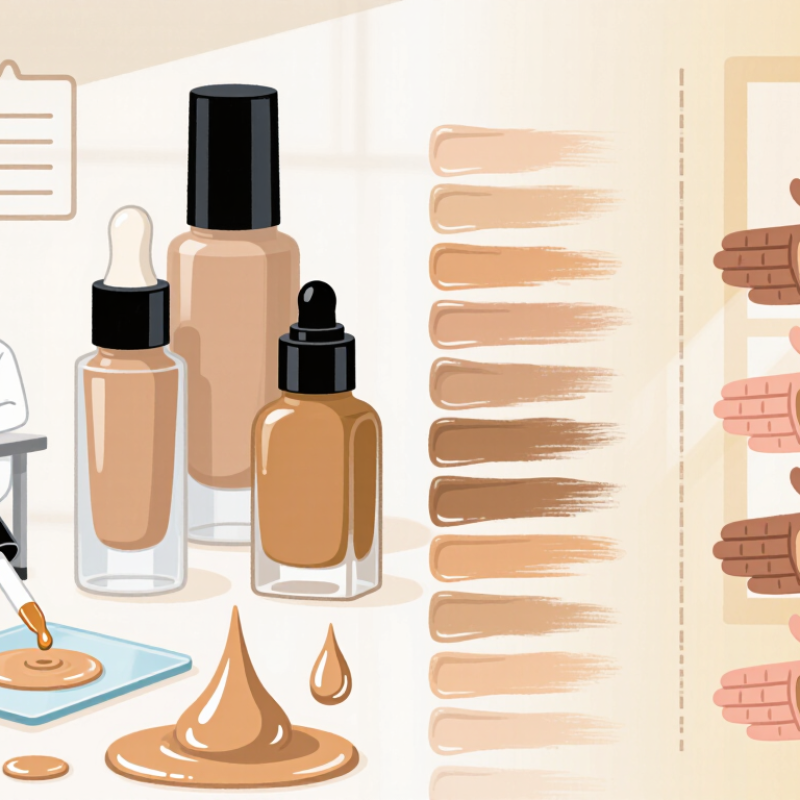
Shade depth, undertone, opacity, and shade transitions can be planned according to the intended customer profile. A range may include light, medium, tan, and deep shades with warm, neutral, and cool undertones. |
Available shades are limited to the supplier’s existing shade library and may not provide balanced undertone coverage. |
Improves inclusivity planning and reduces the risk of inconsistent shade representation. |
| Coverage and Finish |
Coverage can be adjusted from sheer to full, while finish can be optimized for matte, satin, natural, or radiant results. |
Coverage and finish remain fixed unless the supplier already offers multiple versions. |
Allows the product to match a specific consumer need and application preference. |
| Ingredient Strategy |
Ingredient selection may be aligned with claims such as fragrance-free, vegan, silicone-free, alcohol-free, or enriched with selected skin-conditioning ingredients, subject to regulatory review. |
Ingredient choices and claim options are restricted to the existing formula and its supporting documentation. |
Makes the product concept more relevant to a defined target audience. |
| Testing and Validation |
A new formula normally requires stability, compatibility, microbiological, safety, and performance evaluations appropriate to the product and market. |
Existing products may have prior technical documentation, but the brand must still verify suitability, packaging compatibility, labeling, and local compliance. |
Creates a more controlled path from product concept to commercial launch. |
| Development Timeline |
Development commonly involves briefing, laboratory samples, evaluation, revisions, testing, packaging selection, and production planning. The timeline varies by formula complexity and approval speed. |
Usually reaches sampling and production faster because the formula already exists. |
Custom development offers greater control, while ready-made products may suit time-sensitive launches. |
| Minimum Order Quantity |
Custom projects often require higher minimum quantities because separate formula development, testing, filling, and component purchasing create additional production requirements. |
Ready-made options may offer lower entry quantities, depending on the supplier and packaging configuration. |
The decision can be matched to forecasted demand, launch scale, and inventory risk. |
| Cost Structure |
Costs may include formulation work, laboratory samples, testing, packaging components, filling, artwork, and production. Per-unit cost can improve at larger volumes. |
Lower development expense is common, but the product may provide fewer opportunities for exclusive positioning. |
Enables evaluation of total product value rather than comparing formula price alone. |
| Packaging Compatibility |
Formula viscosity, pigment load, dispensing method, container material, pump performance, and closure design can be assessed together. |
Packaging choices may be limited to components that are already compatible with the existing formula. |
Improves user experience and helps reduce leakage, clogging, separation, or dispensing problems. |
| Supply Chain Control |
The development brief can establish target specifications for color, texture, coverage, finish, packaging, and batch consistency. |
The brand depends more heavily on the supplier’s existing specifications and product updates. |
Provides a stronger basis for quality checks and future production monitoring. |
| Regulatory Readiness |
The formula, claims, ingredient labeling, safety documentation, and product information must be reviewed for every intended sales market. |
Existing documentation may shorten preparation, but local requirements and final packaging information still need verification. |
Reduces compliance uncertainty when regulatory planning begins early. |
| Long-Term Brand Equity |
A successful custom formula can become a recognizable product asset with a defined shade system, performance profile, and repeat-purchase experience. |
The product may be easier to launch but is generally less distinctive because similar formulas may be available to multiple businesses. |
Creates greater potential for customer loyalty, product extensions, and a coherent complexion portfolio. |