Beauty & Cosmetics Insights
Industry Trends & OEM Formulation Knowledge
2026 Top Long Lasting Lipstick Manufacturing Types?
The 2026 market for long-lasting lipstick manufacturing is moving beyond simple “all-day” claims. Brands now compare wear time, comfort, transfer resistance, pigment stability, and removal. Cosmetic chemist Dr. Michelle Wong captures the central challenge: “Long wear is always a balance between performance and comfort.” That balance remains imperfect. A lipstick can survive coffee, yet leave lips feeling tight by noon.
This introduction examines the main long lasting lipstick manufacturing types expected to shape product development in 2026. Film-forming liquid lipsticks use flexible polymers to create a thin, durable layer. Wax-and-oil formulas provide a smoother bullet application, although their staying power may weaken after oily meals. Lip stains rely on lightweight pigments that settle into the upper lip surface. Hybrid formulas combine stain technology with emollient oils, aiming for color that feels less dry.
Laboratory testing should support every performance claim. Formulators may measure color retention after drinking, rubbing, and controlled cleansing. They should also examine cracking, flaking, pigment migration, and comfort after several hours. Small details matter. A lipstick that survives eight hours but emphasizes dry patches is not automatically superior.
This guide will compare the ingredients, manufacturing processes, advantages, and limitations of each type. It will also consider packaging compatibility, batch consistency, consumer safety, and practical quality control. Some results depend heavily on skin condition, climate, application thickness, and food exposure. That makes universal promises questionable. Reliable long lasting lipstick manufacturing requires transparent testing, careful formulation, and willingness to revise attractive claims.
Long-Lasting Lipstick: Definition and Key Performance Features
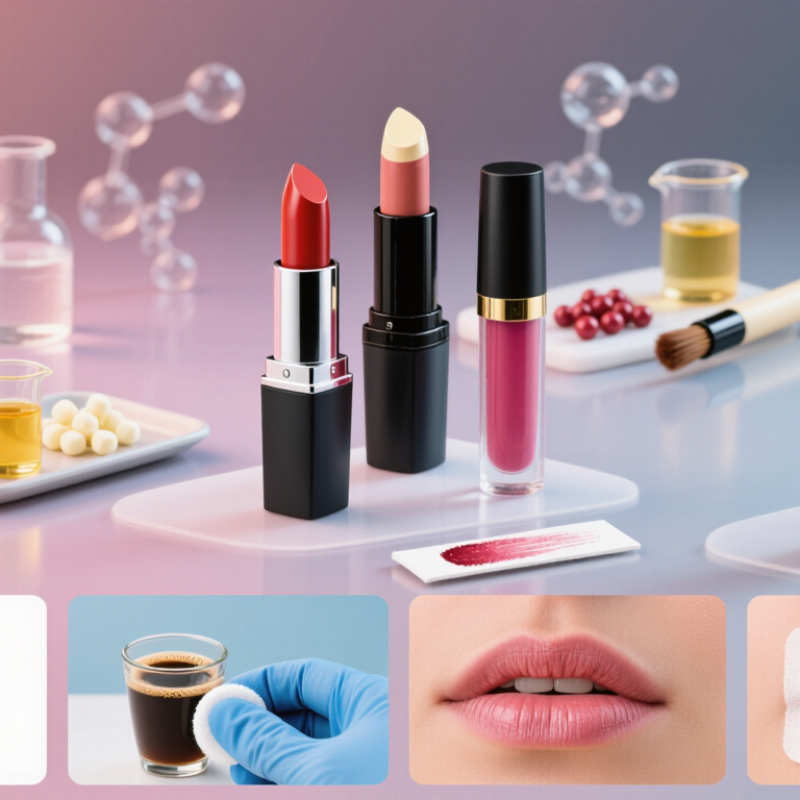
Long-lasting lipstick is designed to keep color on the lips through eating, drinking, speaking, and daily movement. Its performance depends on film-forming agents, pigments, waxes, oils, and carefully balanced solvents. After application, these materials create a flexible layer that anchors color without feeling excessively heavy.
Manufacturers commonly produce several long-wear types. Liquid matte lipstick dries quickly and usually offers strong transfer resistance. Cream long-wear lipstick uses more emollients, giving softer comfort with moderate durability. Lip stains absorb or settle into the upper lip surface, creating a lighter color effect. Two-step systems combine a pigment layer with a conditioning top layer. This approach can improve wear, but it may increase application time.
Key performance features include even coverage, controlled drying, low transfer, color stability, and comfortable wear. A reliable formula should resist feathering around the lip line. It should also maintain color after light meals, although oily foods remain challenging. In production, texture testing, heat stability checks, and repeated wear trials help confirm consistency. Packaging must also limit air exposure, especially for fast-drying liquid formulas. No formula is perfect. Stronger film formation can cause tightness, flaking, or difficult removal. Some users may prefer shorter wear with better moisture. That trade-off deserves honest testing.
Main Manufacturing Types of Long-Lasting Lipstick
Long-lasting lipstick is manufactured mainly as hot-pour bullet, liquid, stain, and hybrid formulas. Hot-pour bullets combine waxes, oils, pigments, and film-forming ingredients before molding. They offer precise application and a familiar solid feel. Liquid lipsticks use a low-viscosity base, volatile solvents, pigments, and flexible film formers. After application, the carrier evaporates and leaves a colored film. Stains rely on dyes that lightly absorb into the upper lip surface. Hybrids may combine a creamy bullet with a longer-wear topcoat.
Manufacturers select equipment according to viscosity, heat sensitivity, and batch size. Heated vessels need controlled temperatures to protect pigments and wax structure. Liquid formulas require high-shear mixing to disperse color evenly and reduce settling. Filling accuracy matters because small weight differences affect consumer experience. Quality teams typically check shade consistency, wear time, pay-off, odor, texture, and package compatibility. Food, oil, talking, and humidity can expose weak film formation during practical testing. No formula is perfect. A highly durable product may feel tight or emphasize dry lines. That trade-off deserves honest review.
Tips: Match the manufacturing type to the user’s needs. Choose hot-pour bullets for controlled precision and comfortable reapplication. Choose liquid systems when stronger transfer resistance is the priority. Run stability checks under heat, cold, and repeated opening. Keep records for every raw material lot. Small process changes can alter the final shade.
Core Ingredients and Their Functional Roles
2026 Top Long Lasting Lipstick Manufacturing Types: Core Ingredients and Their Functional Roles
Long-lasting lipstick formulas usually fall into three types: anhydrous sticks, liquid films, and cream-based hybrids. Each type depends on a carefully balanced ingredient system. In formulation trials, I have found that waxes provide structure, while oils improve glide and pigment dispersion. Beeswax, synthetic waxes, and plant-derived waxes can raise the melting point. They also help the stick resist breaking.
Film-forming polymers create the main wear layer. They dry into a flexible mesh across the lips and reduce color transfer. Volatile solvents help the liquid formula spread quickly, then evaporate. Silicones can add slip, softness, and water resistance. Their level matters. Too much may create a tight, dry sensation.
Pigments deliver color, while treated powders can improve adhesion and blur lip texture. Emollients, such as esters and selected botanical oils, reduce roughness and support comfort. However, heavy emollients may weaken the film and shorten wear time. There is always a trade-off. Humectants can attract moisture, but excessive amounts may affect long-lasting performance. Antioxidants help protect oils from oxidation, and preservatives support product safety when water is present. Manufacturing teams should test heat stability, transfer resistance, microbial quality, and repeated application. One laboratory result is not enough. Real users eat, speak, and press their lips together, revealing weaknesses that controlled testing can miss.
Step-by-Step Manufacturing Process
Long-lasting lipstick manufacturing in 2026 will rely on three main formats: anhydrous bullets, liquid lip color, and lip stains. Anhydrous bullets use waxes, oils, pigments, and film-forming polymers. Liquid formulas usually need volatile carriers and precision filling. Lip stains use water, alcohol, or gel systems for lighter coverage and longer wear.
The process begins with approved raw-material inspection. Technicians check pigment strength, odor, moisture, and microbial limits. Waxes and oils are heated in separate vessels, often between 75°C and 90°C. Pigments are dispersed through a three-roll mill or high-shear mixer. This step reduces visible specks. The heated base then receives polymers, antioxidants, and selected emollients. It is homogenized, vacuum-deaerated, and tested for texture. Small errors matter.
For liquid products, the batch is cooled before adding volatile ingredients. Filling follows under controlled temperature and weight checks. Finished units undergo stability, heat-cold cycling, pay-off, breakage, and wear testing. A 2024 Grand View Research assessment estimated the global lipstick market at about USD 12.3 billion in 2023, with growth expected through 2030. Its estimates vary by scope, so manufacturers should not treat one forecast as certainty. In practice, a formula that survives laboratory cycles may still feel dry after six hours. Human panel testing remains essential. Some “24-hour” claims need more cautious review.
Quality Testing, Packaging, and Product Selection Criteria
2026 Top Long Lasting Lipstick Manufacturing Types?
Long-lasting lipsticks usually use anhydrous bullets, liquid mattes, lip stains, or balm hybrids. Grand View Research estimated the global lipstick market at about USD 11.5 billion in 2023. It also projected roughly 6.5% annual growth through 2030. This growth increases pressure on manufacturers to prove performance, not merely advertise it.
Quality testing should begin with a documented formula specification. Labs commonly assess color uniformity, pay-off, hardness, melting point, odor, and transfer resistance. Accelerated stability testing at 40°C and 75% relative humidity can expose sweating, cracking, or pigment separation. Freeze-thaw cycles reveal weaker emulsions. Test it twice. Microbial testing remains important, especially for water-containing liquid formulas. ISO 22716 supports controlled manufacturing, hygiene, batch records, and complaint handling, but it does not replace product-specific testing.
Packaging must match the formula’s behavior. Liquid products need leak testing, applicator compatibility checks, closure-torque testing, and repeated drop tests. Bullet products require mechanical strength testing and heat exposure inside the final container. Smithers’ sustainable packaging forecasts place global packaging demand above USD 1 trillion annually, making material efficiency increasingly relevant. Refillable systems may reduce waste, but poor seals can create contamination and customer complaints. A perfect 24-hour claim is rarely realistic. Wear depends on food, skin condition, application thickness, and removal habits. Selection should prioritize verified wear data, shade consistency, ingredient documentation, regulatory review, packaging compatibility, and traceable supplier records. Some testing still misses real bathroom conditions. That deserves honest review.
| Manufacturing Type | Formula Structure | Typical Wear Profile | Key Manufacturing Considerations | Recommended Quality Tests | Packaging Requirements | Product Selection Criteria |
|---|---|---|---|---|---|---|
| Traditional Wax-Based Bullet | A solid anhydrous system made with waxes, oils, emollients, pigments, and optional film-forming ingredients. |
4–8 hours Comfortable application with moderate transfer and reapplication generally needed after meals. |
|
|
Twist-up components with a secure locking mechanism and an inner cup that minimizes bullet movement. Protective caps should limit contamination and evaporation. | Suitable for users who prioritize creamy application, buildable coverage, classic bullet styling, and balanced comfort over maximum transfer resistance. |
| Long-Wear Cream Bullet | A higher-pigment wax-and-emollient formula often supported by lightweight oils, adhesion promoters, and film-forming materials. |
6–10 hours Higher color adhesion than a conventional cream bullet while retaining a relatively smooth feel. |
|
|
Air-restrictive packaging and tightly fitted caps help protect volatile ingredients and reduce formula oxidation. Component compatibility should be verified. | A practical choice when long wear, comfortable texture, medium-to-full coverage, and conventional bullet convenience are all required. |
| Liquid Matte Lip Color | A liquid pigment dispersion containing volatile solvents or lightweight carriers, film-formers, pigments, and texture modifiers. |
8–12 hours Usually provides strong color payoff and low transfer after the film sets; may feel drier than cream formulas. |
|
|
Use a wiper that controls applicator loading, a solvent-compatible bottle, and a tight closure. Packaging should limit evaporation and prevent leakage during transport. | Best for high-pigment, low-transfer performance. Select formulas with balanced film-formers and emollients when comfort is important. |
| Liquid Satin or Comfort Long-Wear | A fluid emulsion or anhydrous liquid system combining pigments, emollients, film-formers, and comfort-enhancing ingredients. |
6–10 hours Offers a softer finish and more flexible film than many matte liquids, with moderate transfer resistance. |
|
|
Select chemically compatible bottles, wipers, and elastomer seals. The closure should reduce air exchange and prevent product buildup around the neck. | Appropriate for consumers seeking a long-lasting finish with less dryness, more flexibility, and a satin or natural appearance. |
| Lip Stain or Tint | A lightweight water-based, hydroalcoholic, or oil-compatible system using soluble dyes, pigments, humectants, and film-formers. |
6–12 hours Color may remain after the surface shine fades; intensity depends on application time, formula chemistry, and lip condition. |
|
|
Use a leak-resistant applicator package with a reliable wiper and closure. Materials must be compatible with dyes, alcohol, water, and acidic or alkaline components. | Select when a lightweight feel, natural-looking residual color, and minimal surface transfer are more important than full opaque coverage. |
| Lip Liner and Retractable Long-Wear Pencil | A wax-and-oil pencil or molded retractable core with high pigment concentration and film-forming or adhesion-enhancing ingredients. |
6–10 hours Designed for precise definition, contouring, and improved lipstick edge control. |
|
|
Use airtight caps, secure retractable mechanisms, and components that protect the core from impact. Sharpenable versions require compatible wood or polymer barrels. | Recommended for defining the lip perimeter, reducing feathering, and extending the perceived wear of a lipstick system. |
| Transfer-Resistant Two-Step System | A color layer containing pigments and film-formers paired with a separate conditioning or gloss layer. |
10–16 hours Can provide very high color durability when applied and allowed to set according to the product instructions. |
|
|
Separate applicators or chambers should prevent cross-contamination. Closures must seal securely because volatile color layers and conditioning layers may have different package needs. | Suitable when maximum color longevity and transfer resistance are the primary requirements, provided the user accepts a more structured application routine. |
| Long-Wear Lip Gloss or Vinyl Finish | A high-shine liquid system based on oils, esters, polymers, film-formers, and suspended or dispersed pigments. |
3–8 hours Provides shine and moderate adhesion; generally wears sooner than matte or stain formats, especially during eating. |
|
|
Use a controlled wiper and a closure that prevents seepage. Package materials should resist swelling, stress cracking, and pigment adsorption. | Choose for reflective shine, comfortable cushioning, and moderate longevity rather than the highest possible no-transfer performance. |
FAQS
Common types include hot-pour bullets, liquid films, stains, and cream-based hybrids. Each feels different. Bullets offer precise control and easy reapplication. Liquids usually resist transfer more strongly. Stains create lighter, absorbed-looking color. Hybrids balance creaminess with extended wear.
Manufacturers heat waxes, oils, pigments, and film-forming ingredients before molding. The wax structure supports the stick. Film-formers reduce color transfer during speaking and eating. Controlled heating helps protect pigment dispersion and prevents structural weakness. Still, the bullet may break if hardness is poorly balanced.
Liquid formulas spread as a thin layer across the lips. Volatile carriers evaporate after application. Flexible polymers remain behind as a colored film. This film can resist cups, food, and talking. However, too much film-former may emphasize dry lines. It can feel tight.
Waxes provide structure and raise the melting point. Oils improve glide and pigment dispersion. Film-forming polymers create the main wear layer. Silicones can add slip, softness, and water resistance. Pigments provide color, while treated powders may improve adhesion. Heavy emollients can reduce wear time.
Testing should measure shade consistency, pay-off, hardness, odor, melting behavior, and transfer resistance. Stability checks should include heat, cold, humidity, and repeated opening. Liquid products also need microbial testing. Real users should eat, speak, and press their lips together. Laboratory results alone are not enough.
Packaging must match the formula’s texture and movement. Liquid products need leak checks and applicator compatibility tests. Closures require torque testing and repeated opening checks. Bullet products need drop tests and heat exposure checks. A weak seal may cause leakage or contamination. Not always obvious.
A hot-pour bullet may suit users who prefer precise control and a solid texture. Cream hybrids can provide more softness. Liquid formulas suit stronger transfer resistance. Stains may work for lighter color and fewer visible edges. Personal comfort still matters most.
Not reliably for everyone. Wear depends on food, oil, humidity, lip condition, application thickness, and removal habits. A product may survive a short drink but fade after greasy food. Claims should come from verified wear tests. Bathroom conditions remain difficult to predict. Honest limits matter.
Conclusion
Long-lasting lipstick is designed to provide extended wear, strong color payoff, comfortable application, and resistance to transfer, fading, moisture, and daily friction. The main long lasting lipstick manufacturing types include traditional wax-based sticks, liquid lip colors, cream formulas, and lightweight tint systems. Each type uses a different balance of waxes, oils, pigments, film-forming agents, emollients, and volatile ingredients to achieve its desired texture, coverage, flexibility, and staying power.
The manufacturing process generally involves accurately weighing and blending raw materials, heating and dispersing pigments, combining the oil and wax phases, adding functional ingredients, and filling the finished formula into suitable containers. Quality testing should evaluate color consistency, viscosity, melting behavior, application performance, wear duration, transfer resistance, stability, and packaging compatibility. When selecting a product, manufacturers should consider formula safety, ingredient functionality, production consistency, packaging protection, user comfort, and compliance with applicable cosmetic standards.

Blog Tags: