Global buyers are looking beyond attractive packaging and fast claims. They need professional nail care formulas that perform consistently across salons, climates, and application habits. A gel system may face heat, humidity, cold storage, or repeated transport. These conditions can influence viscosity, curing behavior, adhesion, and user comfort.
Doug Schoon, a respected nail industry scientist and former chief scientific advisor, has stated, “The nail plate is not living tissue.” This simple point matters. Professional products should support the natural nail environment without making exaggerated repair promises. Buyers should examine ingredient transparency, curing instructions, safety data, batch consistency, and compatibility between base coats, color layers, and top coats. A reliable formula begins with controlled chemistry, not attractive marketing language.
This guide examines professional nail care formulas through a practical purchasing lens. It considers builder gels, rubber bases, cuticle-care products, nail strengtheners, removers, and professional cleansing systems. Texture can be observed on a brush. Curing performance can be tested under the recommended lamp. Odor, removal time, surface finish, and wear resistance also deserve attention. Some results may vary between technicians, even with the same formula. That is an uncomfortable reality, but it should not be hidden. No formula is perfect. Strong purchasing decisions require documented testing, responsible claims, and feedback from trained users in real salon conditions. Global buyers can then compare performance with greater confidence, while respecting regional requirements and professional-use boundaries.
Professional Nail Formula Types: Gel, Acrylic, Polish, and Treatment Systems
Top Professional Nail Care Formulas for Global Buyers
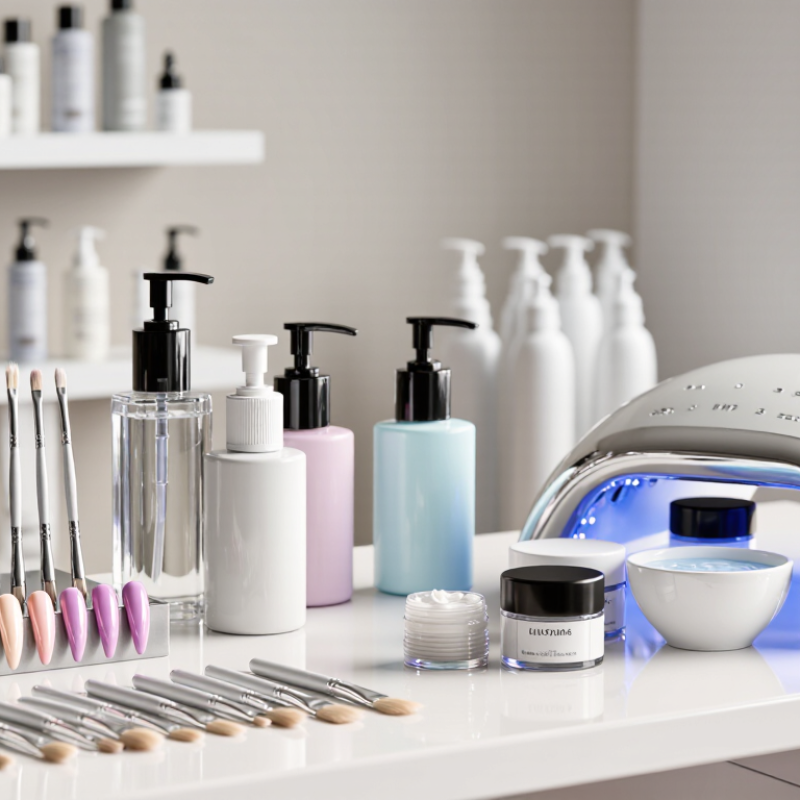
Professional nail formulas should be selected by service purpose, not appearance alone. Gel systems provide controlled viscosity, smooth leveling, and a durable finish after proper curing. Buyers should review lamp compatibility, curing time, flexibility, and removal behavior. A gel that cures unevenly can leave soft areas beneath the surface.
Acrylic systems support sculpting, extensions, and structured overlays. Their powder-to-liquid balance affects workability, strength, and setting speed. Skilled technicians often test a small bead before production use. Temperature and humidity can change the working window. That detail matters. Odor control and ingredient documentation also influence salon acceptance and shipping decisions.
Polish systems suit fast color services and frequent changes. They need even pigment flow, reliable drying, and resistance to early chipping. Treatment systems focus on dry, brittle, or thin nails, using conditioning and protective formulas. However, “strengthening” claims should match available testing evidence. A formula may perform well in one climate but fail in another. Global buyers should request ingredient lists, safety data, stability results, and batch records. Local requirements still need separate verification. Practical trials remain essential. Testing is never perfect.
| Formula Type | Main Chemistry | Curing or Drying Method | Typical Service Time | Typical Wear Performance | Professional Applications | Key Advantages | Buyer Considerations |
|---|---|---|---|---|---|---|---|
| UV/LED Gel Polish | Light-curable acrylate or methacrylate oligomers, monomers, pigments, and photoinitiators | UV or LED lamp; curing time depends on lamp wavelength, power, and film thickness | Approximately 45–75 minutes, including preparation and curing | Usually about 2–3 weeks when correctly applied and removed | Color services Salon manicures Nail art | High gloss, fast salon workflow, low air-dry risk, and broad color customization | Verify lamp compatibility, curing instructions, viscosity, pigment dispersion, removal process, and allergen labeling |
| Builder Gel | Higher-viscosity light-curable gel containing reactive acrylate or methacrylate components | UV or LED lamp; thicker layers may require controlled application and complete curing | Approximately 60–90 minutes | Commonly 3–4 weeks with proper structure and maintenance | Overlay Short extensions Natural nail reinforcement | Self-leveling options can improve structure, durability, and natural-looking overlays | Assess viscosity stability, heat sensation during curing, soak-off or file-off removal, and required lamp specifications |
| Hard Gel | Cross-linked light-curable gel designed for rigid nail enhancement | UV or LED lamp according to the product's validated cure system | Approximately 75–120 minutes | Often 3–4 weeks before maintenance, depending on nail growth and daily use | Structural extensions Long-wear overlays Sculpted nails | Rigid structure, strong shaping capability, and suitability for longer enhancements | Usually requires filing for removal; confirm flexibility, filing behavior, heat control, and technician training requirements |
| Acrylic Powder and Liquid | Polymer powder combined with liquid monomer, forming a chemically cured acrylic polymer | Air curing through polymerization; no lamp is normally required | Approximately 75–120 minutes | Commonly 3–4 weeks with correct application and refill maintenance | Sculpted extensions Tips Repairs | Strong structure, adjustable working time, and good suitability for sculpting and repairs | Control monomer odor, powder particle handling, ratio consistency, setting speed, ventilation, and regulatory documentation |
| Dip Powder System | Colored or clear polymer powder used with resin-based adhesive and activator layers | Air curing after resin and activator application; lamp use may vary by system | Approximately 45–75 minutes | Often about 2–3 weeks, depending on preparation and natural nail condition | Natural nail overlays Color services Low-lamp workflows | Efficient color application, moderate reinforcement, and no traditional liquid monomer mixing | Check powder hygiene controls, resin viscosity, activator compatibility, dust management, and removal instructions |
| Traditional Nail Polish | Solvent-borne film-forming polymers, resins, plasticizers, pigments, and suspending agents | Air evaporation of volatile solvents | Approximately 30–60 minutes, including base and top coats | Typically 3–7 days on fingernails; performance varies with preparation and use | Express services Retail color Easy color changes | Simple application and removal, wide shade flexibility, and no curing lamp requirement | Review drying speed, viscosity, brush quality, odor profile, solvent compliance, sedimentation, and shelf stability |
| Base Coat and Top Coat System | Film-forming polymer system designed for adhesion, smoothing, gloss, or surface protection | Air-dry or light-cure, depending on the system | Approximately 5–15 minutes as an add-on to a manicure | Can improve polish adhesion, gloss retention, and chip resistance | System finishing Surface smoothing Professional retail | Supports consistent service results and can reduce staining or premature chipping | Test compatibility with color coats, drying or curing time, gloss retention, brush control, and yellowing resistance |
| Nail Strengthening Treatment | Conditioning or film-forming system containing polymers, plasticizers, proteins, oils, or other cosmetic ingredients | Usually air-dry; some systems are used as leave-on treatments | Approximately 5–15 minutes per application | Results are gradual and depend on nail growth, repeated use, and the condition of the nail plate | Brittle nails Post-removal care Maintenance programs | Supports maintenance routines and can provide temporary protective film or improved surface feel | Avoid medical treatment claims unless substantiated; verify ingredient safety, usage frequency, claims support, and consumer directions |
| Cuticle and Nail Conditioning Oil | Blend of cosmetic oils, esters, emollients, and optional fragrance or vitamin derivatives | No curing required; absorbs or remains as a conditioning film | Approximately 2–5 minutes per application | Provides short-term moisturization; requires regular use for continued conditioning benefits | Aftercare Retail add-on Daily maintenance | Easy to use, suitable for home-care routines, and compatible with many manicure services | Evaluate oxidation stability, packaging leakage, dropper or brush performance, fragrance allergens, and compatibility with enhancements |
| Professional Nail Prep and Dehydrator | Volatile solvent-based preparation designed to remove surface moisture and residues before enhancement | Rapid air evaporation before primer, base, gel, or acrylic application | Approximately 2–5 minutes as part of preparation | Indirectly supports service durability by improving surface preparation | Pre-service preparation Adhesion support Salon systems | Fast application and useful for reducing surface oils before enhancement services | Confirm solvent restrictions, flammability classification, compatibility with primers, packaging safety, and ventilation guidance |
FAQS
Choose by service purpose, not appearance alone. Gel suits durable, smooth finishes after proper curing. Acrylic supports sculpting and extensions. Polish fits quick color changes. Treatment formulas target dry, brittle, or thin nails.
Check lamp compatibility, curing time, viscosity, flexibility, and removal behavior. Test a thin sample under the intended lamp. Uneven curing may leave soft areas beneath the surface. That hidden weakness matters.
Powder-to-liquid balance controls workability, strength, and setting speed. Temperature and humidity can change the working window. Test one small bead before wider use. Small trials reveal awkward handling.
It should provide even pigment flow, reliable drying, and resistance to early chipping. Excessive plasticizer may soften the film. A finish that dries too quickly can lose smoothness near the cuticle.
Nitrocellulose forms the main film. Acrylate copolymers can improve adhesion, flexibility, and gloss. Cellulose acetate butyrate may reduce brittleness. Plasticizers help prevent cracking, but excessive amounts can weaken the finish.
Not necessarily. Topical evidence for stronger nail growth remains limited. Separate measurable film performance from attractive claims. The wording may sound convincing, but testing should lead.
Request ingredient lists, safety data, stability results, batch records, allergen information, and test methods. Also review viscosity, drying time, adhesion, flexibility, and microbiological results. Documents should match the actual formula.
Requirements differ by destination. Review responsible-party details, safety files, ingredient names, warnings, product claims, batch identification, and required notifications. Verify local rules separately. A compliant file may still need correction.
Conclusion
Professional nail care formulas encompass a wide range of systems, including gel, acrylic, traditional polish, and treatment products designed for different service needs and consumer preferences. Their performance depends on carefully selected polymers, solvents, resins, plasticizers, pigments, and conditioning ingredients that influence adhesion, flexibility, durability, gloss, and curing behavior. Understanding this chemistry helps global buyers compare product quality and identify formulas suited to professional salon use.
Safety and manufacturing standards are equally important. Products should be developed and documented in alignment with EU Regulation 1223/2009 and applicable FDA cosmetic requirements, supported by appropriate ingredient assessments, labeling, and product records. ISO 22716:2007 Good Manufacturing Practices can help ensure consistent production, hygienic processes, traceability, and reliable quality control. When evaluating suppliers, buyers should consider wear time, cure speed, application performance, total cost, documentation quality, and regulatory risk to make informed purchasing decisions across international markets.