
Choosing a custom lip gloss supplier is not just a packaging decision. It affects formula consistency, product feel, delivery timing, and the quality of every finished tube. The market is expanding. McKinsey & Company’s 2023 beauty report projected that global beauty sales could reach about $580 billion by 2027, with roughly 6% annual growth. That growth brings more supplier options, but a polished website cannot prove dependable production.
Samples can mislead. A gloss that feels smooth in one tube may vary across a larger batch. Ask how the supplier controls formula records, shade matching, filling weights, packaging checks, and production changes. Request a sample made with the intended packaging, then compare its texture, scent, applicator, and finish with the approved reference. Small details matter. Check realistic minimum order quantities and lead times, too; a low price means little if delivery dates keep shifting.
FDA cosmetics expert Dr. Linda M. Katz’s public guidance emphasizes that responsible companies must support the safety of their products. Put plainly, and as a paraphrase rather than a verbatim quotation: “A supplier’s assurances do not replace your own product checks.” A reliable custom lip gloss supply partner should provide clear documentation, answer technical questions, and explain how it handles inconsistent batches. These are practical checks, not guarantees. McKinsey’s market forecast describes opportunity, not supplier quality. Use the steps in this guide to assess evidence before committing to a production run.
Define Your Custom Lip Gloss Requirements
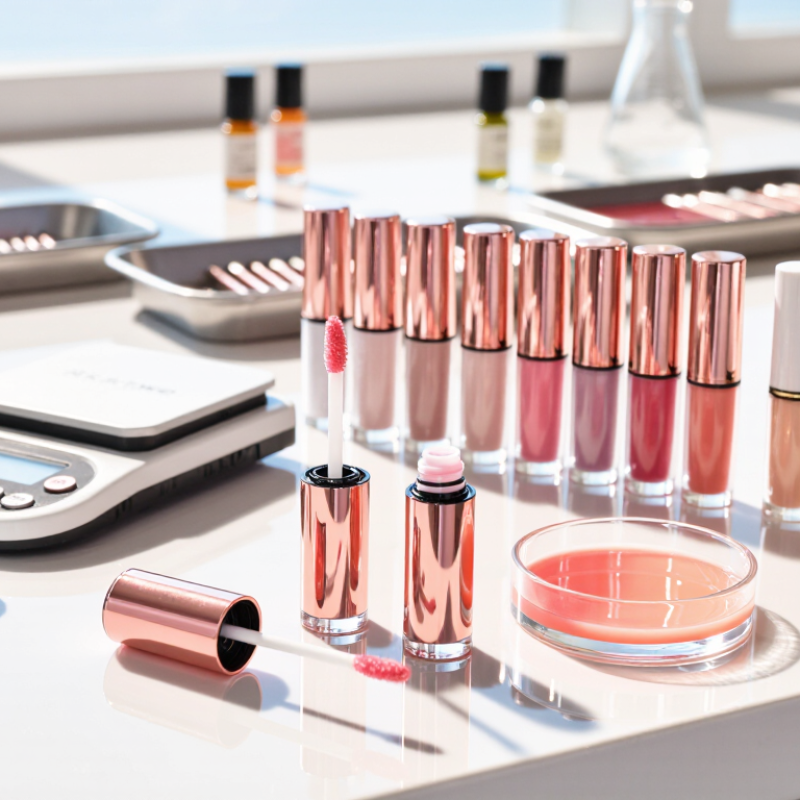
Before contacting a custom lip gloss supplier, define the product you actually need. Specify your target customer, retail price, shade range, finish, and preferred feel. Is it sheer and lightweight, or opaque and cushiony? Describe the applicator, tube size, and packaging material, too. Small details matter: a wide doe-foot can pick up more product, while a narrow opening may suit a less-messy application. Write them down. McKinsey’s 2023 beauty market analysis projected the global beauty market could reach $580 billion by 2027, but broad growth does not guarantee demand for your particular gloss. Your brief should reflect your own customers, not just a market forecast.
Set practical production requirements before comparing suppliers. State your expected order quantity, desired delivery window, budget range, and whether you need custom shades or existing formulas. Ask what sample rounds are included, and how the supplier checks texture, color consistency, leakage, and packaging compatibility. Grand View Research estimated the global lip care market at about $2.15 billion in 2023, with projected growth through 2030; lip care is not the same category as lip gloss, so treat this as context, not proof of demand. I would also leave room to revise a shade after seeing it in daylight. A swatch on a screen can be misleading. A clear brief makes supplier quotes easier to compare, though some details will probably change once you test samples.
| Requirement | What to Define | Example Specification or Acceptance Criteria |
|---|---|---|
| Product format | Choose the gloss type and intended use. | Non-plumping lip gloss for everyday wear; specify whether it should be sheer, tinted, glittered, or clear. |
| Formula and feel | Describe the desired texture, payoff, scent, and wear experience. | Smooth, evenly spreading texture; defined level of shine; no intentional fragrance, if fragrance-free is required. Confirm the final details through sample approval. |
| Shade and appearance | Provide shade references, coverage level, and any shimmer or opacity requirements. | One sheer rose shade with fine shimmer; approve a physical color standard because shade appearance can vary with lighting, formula, and packaging. |
| Ingredient requirements | List required, restricted, and excluded ingredients, along with any substantiation needed for product claims. | Provide the proposed ingredient list using INCI names; identify any ingredients to exclude and request supporting information for claims such as vegan or fragrance-free. |
| Packaging and fill size | Specify container style, applicator, material, nominal fill, and decoration. | Wand applicator; 5 mL nominal fill; define container material, cap finish, label or print method, and packaging dimensions. |
| Market and compliance | Identify every intended sales market and agree who is responsible for regulatory review and label requirements. | Specify the destination country or region. Request applicable ingredient and color-additive information, draft labeling details, and documentation needed for that market; requirements differ by jurisdiction. |
| Safety and quality documents | Define which product, ingredient, and batch records are needed before approval and shipment. | Request the formula or ingredient declaration, relevant safety and stability information, packaging compatibility results, and a batch-specific certificate of analysis where available and applicable. |
| Order quantity and budget | Set an initial order quantity, target unit cost, and maximum acceptable minimum order quantity. | Request separate quotations for formula development, packaging, sampling, production, and freight; confirm whether minimum quantities apply per shade or per formula. |
| Samples and approval | Set the sample rounds and the criteria required for written sign-off. | Approve the final shade, texture, scent, applicator, fill, and decoration on documented samples before authorizing bulk production. |
| Timeline and delivery | Provide the required delivery date, destination, and any launch or shipping constraints. | Ask for a written schedule covering sampling, artwork approval, production, inspection, and transit; confirm which events may change the estimated dates. |
| Quality control | Set acceptance checks and agree how defects or nonconforming goods will be handled. | Define checks for fill quantity, leakage, applicator function, appearance, packaging, and batch identification; agree on inspection records and a written corrective-action process. |
FAQS
Describe your target customer, price, shades, finish, and preferred feel. Include tube size, applicator, packaging material, order quantity, budget, and delivery window.
Screen colors can differ from the finished gloss. Check samples in daylight. Screens can mislead.
Ask how the supplier adjusts viscosity and disperses pigments. Confirm the formula works with your chosen applicator. A thick gloss may cling to the wiper.
Ask about leakage and packaging compatibility tests. Find out what happens after tubes stand upright for several weeks or travel in warm conditions.
Request details about batch records, fill-weight checks, and defect procedures. Specific steps matter more than broad quality promises.
Ask how many sample rounds are included and how texture and color are checked. I would leave room to adjust a shade after testing it.
Compare your expected quantity with the supplier’s equipment and minimum run. A large production line may not suit a small launch.
A pilot can reveal filling or consistency issues. It may feel slow, but skipping it leaves questions unanswered. I might still revise the plan after testing.
Conclusion
Finding a reliable custom lip gloss supplier starts with a clear product brief. Define the gloss’s desired texture, finish, shades, packaging, order volume, and target price before comparing manufacturers. Then look for suppliers with equipment and experience suited to your formulation and packaging needs, and ask how they manage product consistency, ingredient documentation, safety checks, and quality control.
Request samples to assess appearance, feel, and packaging, and compare quotes alongside minimum order quantities, lead times, payment terms, and options for revisions. Before placing an order, verify the supplier’s production capacity, communication practices, references, and written agreements. A careful evaluation of these details can help you choose a dependable partner for custom lip gloss supply and reduce the risk of unexpected delays, quality issues, or costs.